
LED Video Wall Panels: Costs, Types & Buying Guide
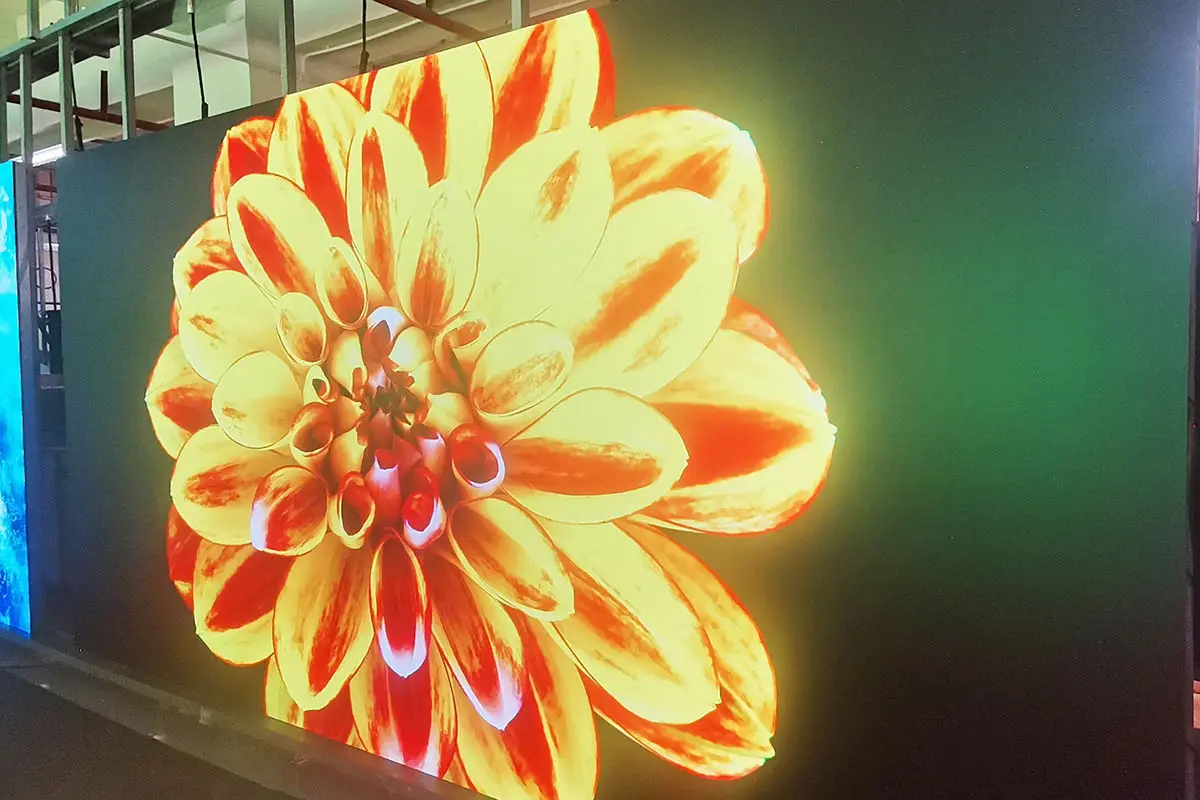
LED video wall panels are modular direct-view displays that join together to create one large image. Choose them by installation environment, nearest viewing distance, required resolution, service access and total installed cost. Indoor projects usually prioritize close-view detail and comfortable brightness; outdoor projects also need documented weather protection, daylight visibility and an engineered support structure.
This guide explains how to compare LED video wall panels for meeting rooms, retail, stages and outdoor advertising. It separates cabinet specifications from complete-system requirements so you can request comparable quotations and avoid paying for features your audience will never use.
Quick selection: measure the available wall and closest viewer first, shortlist suitable indoor or outdoor cabinets, calculate the actual pixel canvas, then test your content. A screen that accepts a 4K signal is not necessarily a native 4K display.
Compare HonghaiLED Panels for Your Project
Start with the installation type, then request the exact cabinet datasheet. The links below lead to HonghaiLED product information; they are a shortlist by application, not a claim that one model fits every project.
| Project | HonghaiLED range or model | Selection checkpoint |
|---|---|---|
| Permanent indoor video wall | Indoor LED screens | Pixel density, low-brightness detail and service access |
| Outdoor advertising wall | HH960F3 outdoor LED billboard | Exact environmental rating, cabinet layout and maintenance method |
| Temporary stages and events | HH1000H9 rental LED wall | 500 × 1000 mm cabinets; specify the indoor or outdoor variant |
| Glass storefront | Transparent LED screens | View-through requirement, reflections and daylight readability |
Request an itemized LED video wall quotation with your screen dimensions, nearest viewing distance, installation photos and delivery city.
1. Indoor, Outdoor and Rental LED Video Wall Panels
Each cabinet contains LED modules, receiving electronics and power components. A processor maps the incoming video onto the assembled screen. Cabinet alignment, calibration and signal configuration determine whether the finished image looks consistent across every join. The panel is therefore one part of the system, not a complete television on its own.
01. Why choose LED video wall panels?
LED video wall panels allow screen dimensions and aspect ratios to follow the space. They avoid the conventional bezel grid of tiled LCD screens, although poor mechanical alignment can still make cabinet boundaries visible. Replaceable modules can simplify repairs when the installation provides suitable access and compatible spare parts.
Direct-view LED is useful for large, bright or unusually shaped displays. It is not automatically the best choice for every small room. Compare an LED wall with a commercial LCD display or projection system using the same image size, ambient light, text requirements and ownership period. For a home theater, also assess low-brightness performance, acoustic noise and viewing comfort.
02. Types of LED video wall panels
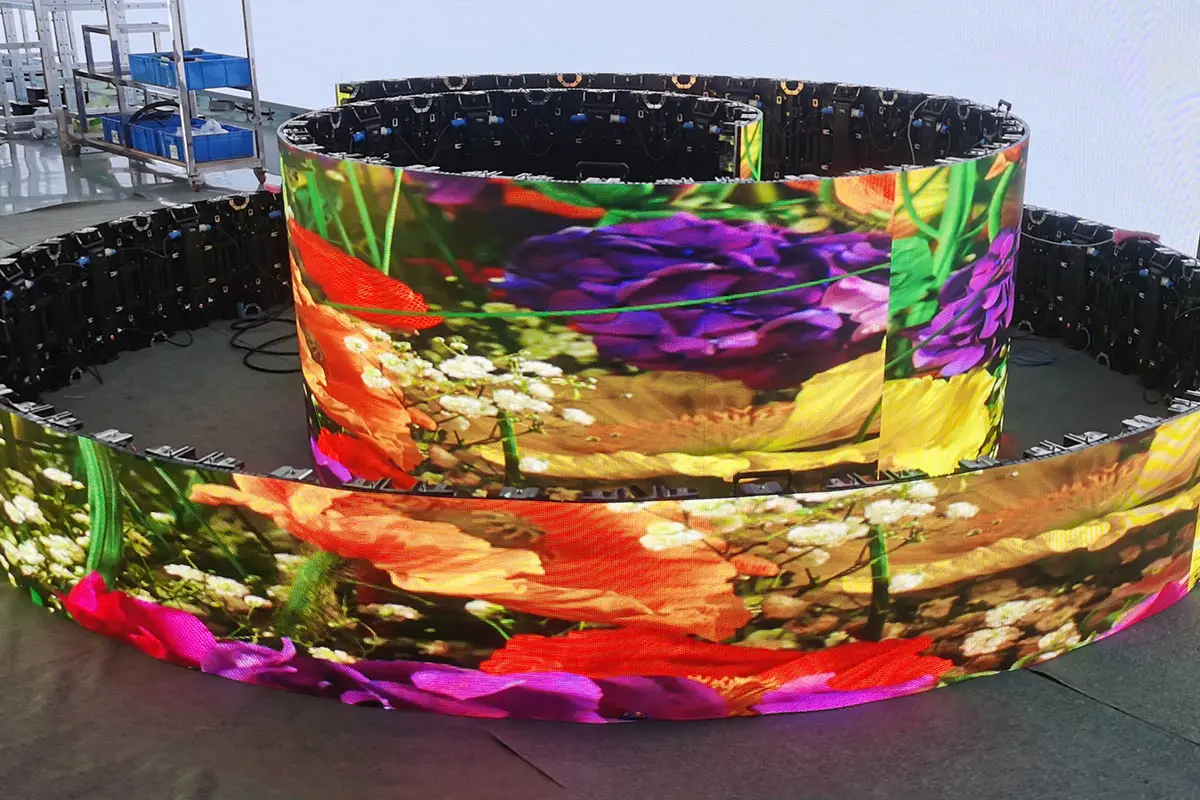
Indoor fixed LED screens suit permanent meeting rooms, lobbies and retail interiors. Outdoor fixed cabinets support exposed advertising installations. Rental cabinets prioritize repeated assembly, transport and service. Transparent and flexible systems address architectural requirements but introduce their own compromises in image density, contrast or installation geometry.
| Panel type | Main priorities | What to verify | Typical fit |
|---|---|---|---|
| Indoor fixed | Fine detail, low-brightness uniformity, quiet operation | Nearest-seat readability and front-service clearance | Meeting rooms, control rooms, retail |
| Outdoor fixed | Daylight contrast, environmental protection, robust structure | Front/rear IP ratings, heat management, wind design | Billboards and building facades |
| Rental and staging | Fast alignment, handling protection, transportability | Rigging limits, connectors, replacement speed | Concerts, exhibitions and events |
| Transparent | Sightlines and light transmission | Transparency versus pixel density and contrast | Glass storefronts and architectural glazing |
| Flexible or curved | Controlled curvature and creative geometry | Minimum radius, support design, service method | Columns, curved stages and feature walls |
Do not assume every cabinet in a product family has the same environmental rating. For example, HonghaiLED lists separate indoor and outdoor configurations for the HH1000H9 rental LED wall. Specify the exact model and bill of materials when comparing LED video wall panels.
2. How Much Do LED Video Wall Panels Cost?
The price of LED video wall panels depends on pitch, cabinet construction, LED packaging, electronics, quantity and support scope. There is no reliable universal installed price per square meter. A bare module, a complete cabinet and a commissioned video wall are different products, even when a listing uses the same word, “panel.”
01. LED video wall panel price: compare complete quotations
Ask whether an LED screen panel price is per cabinet, per square meter or for a complete package. Confirm active screen dimensions rather than relying on a rounded diagonal measurement. Quotations should identify the currency, validity period, delivery terms and excluded work. Outdoor panels do not always cost more than indoor models: very fine-pitch indoor systems can carry a higher hardware cost.
| Cost item | Ask the supplier to state | Why it matters |
|---|---|---|
| Display cabinets | Model, quantity, pitch, area and native resolution | Prevents comparisons between unequal screens |
| Control equipment | Processor, receiving cards, inputs and pixel capacity | Determines source compatibility and mapping |
| Mounting and access | Frame, brackets, rigging, service space and engineering | Often outside the advertised hardware price |
| Power and signal | Distribution, cabling, protection and installation labor | Must suit the full system load and cable routes |
| Delivery | Packing, freight, insurance, duties and taxes | Establishes the delivered project cost |
| Commissioning and support | Calibration, training, spares, warranty and service response | Affects readiness and future downtime |
02. Calculate area, quantity and ownership cost
A simple planning example makes quotations easier to check. A 4 m × 2.5 m wall has 10 m² of active area. With 500 × 500 mm cabinets, each cabinet covers 0.25 m², so the layout requires 8 cabinets across and 5 high: 40 cabinets total. This is a dimensional example, not a recommendation for a specific product.
If a supplier quotes a cabinet price of C, the display-cabinet subtotal is 40 × C. Add the processor, structure, power distribution, freight, labor and agreed spares separately. Avoid multiplying a price per cabinet by square meters. For LED video wall panels, this unit mismatch can distort a budget before technical selection even begins.
Ownership cost also includes electricity, maintenance, replacement parts and access equipment. A lower initial quote can become expensive if one failed module requires dismantling the entire wall. Compare LED video wall panels over the same operating schedule and service period, and request the warranty exclusions in writing.
03. Rent or buy?
Rental LED display systems can suit occasional events, particularly when screen size changes from show to show. Compare delivered rental cost, including technicians, transport, setup, dismantling and event days. Ownership becomes more attractive when utilization is predictable and you have storage, trained staff and a maintenance plan. A daily panel rate alone is not the event budget.
3. Buying Guide: How to Choose the Right LED Video Wall Panels
The best LED video wall panels are those that meet a documented project brief. Work through the following checks before comparing brand claims. Record mandatory requirements separately from optional upgrades, and ask each supplier to respond to the same specification.
01. Purpose: indoor, outdoor or storefront?
Define the content and audience: spreadsheets in a meeting room, product videos in a shop, stage backgrounds or roadside advertising. Measure nearest and farthest viewing positions. Small text makes different demands from large graphics. LED video wall panels that look good in a promotional video may not reproduce your actual presentation clearly.
A storefront behind glass needs a separate assessment of daylight, reflections and heat accumulation. Being indoors does not guarantee that a standard indoor brightness specification will work. Equally, brighter cabinets do not remove the need to assess cooling, viewing angles and nighttime dimming. Request a demonstration under comparable lighting.
02. Pixel pitch and native resolution
Pixel pitch is the center-to-center spacing between adjacent pixels, measured in millimeters. Smaller pitch puts more pixels into the same area. It can improve close-view detail but increases pixel count and usually cost. Use the HonghaiLED display resolution guide to relate pixel pitch to the physical screen and source content. Viewing comfort and text readability still require a demonstration at the intended distance.
For an initial calculation, divide screen width and height in millimeters by pitch. Use the manufacturer’s exact cabinet pixel dimensions for the final design because marketed pitch values may be rounded. A processor can scale a 4K input down to a smaller pixel canvas, but it cannot create physical pixels that the wall does not contain.
| Exact pitch | Calculated width × height | Pixel count | Practical implication |
|---|---|---|---|
| 1.25 mm | 3,840 × 2,160 | 8,294,400 | Native UHD canvas if cabinet geometry supports it |
| 1.5 mm | 3,200 × 1,800 | 5,760,000 | Detailed canvas, but below native UHD |
| 2.5 mm | 1,920 × 1,080 | 2,073,600 | Native Full HD under these assumptions |
| 3 mm | 1,600 × 900 | 1,440,000 | Check fine text and input scaling carefully |
These are mathematical examples, not available cabinet layouts or viewing-distance promises. Evaluate LED video wall panels at the nearest seat with representative text, faces and motion. A larger screen does not automatically solve low resolution, and a finer pitch does not fix poor source material.
03. Brightness specifications and camera performance
Brightness is measured in nits, equivalent to cd/m². Select enough output for the ambient light while retaining useful dimming range. HonghaiLED’s EA1000H9 page lists indoor variants at 700–800 cd/m² and outdoor variants at 4,000–6,000 cd/m². Those figures describe that product family, not a rule for all LED video wall panels.
Inspect grayscale and color uniformity at the brightness you will actually use. Maximum brightness is less helpful if dark scenes lose detail after dimming. For camera work, refresh rate, scan behavior, processor timing, shutter settings and camera movement interact. A “3,840 Hz” label alone cannot guarantee artifact-free footage.
Test LED video wall panels with the intended camera, shutter, lens, frame rate and pan movements. Moiré also depends on the relationship between the camera sensor and the display’s pixel structure.
04. Durability and weather-resistant features
Outdoor LED video wall panels need a documented environmental specification for the whole installation. Record separate front and rear ratings where applicable. IP65 describes dust-tight protection and resistance to water jets under test conditions; it does not establish immersion suitability, corrosion resistance or structural wind capacity.
Inspect cable entries, connector covers, gaskets, ventilation paths and power enclosures. A cabinet rating cannot compensate for exposed accessories or incorrect assembly. Review the LED display IP-rating guide, then request documentation for the exact model and mounting configuration. Coastal exposure, condensation and strong sunlight require additional consideration beyond the IP code.

05. Sightlines, cabinet size and service access
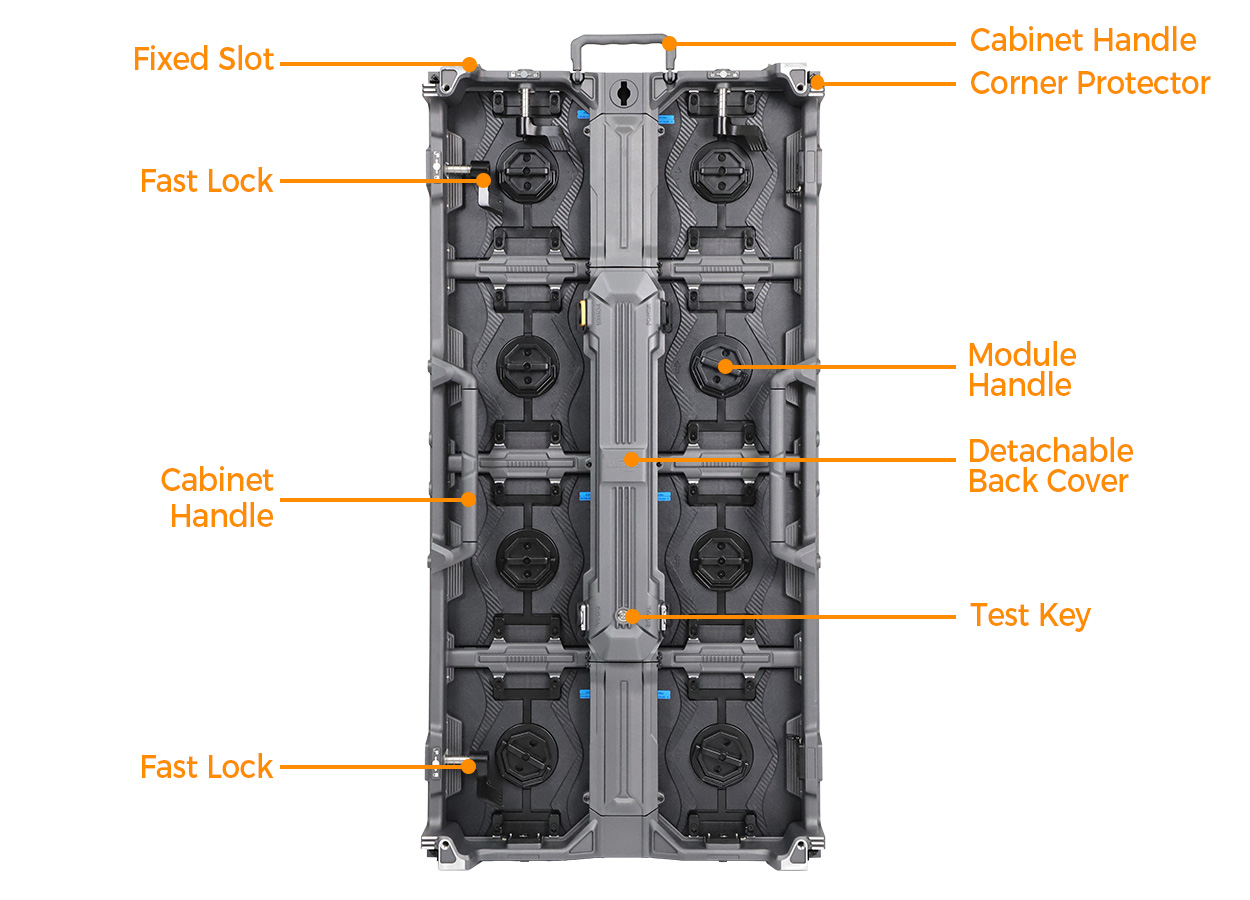
Check sightlines from the sides and from seated positions, not just directly in front. Match cabinet dimensions to the opening and allow room for installation tolerances, structure and access. When comparing LED video wall panels, ask for a drawing showing active image size, total installed depth and removal clearance.
Front-service modules help where rear access is limited, but power supplies and other parts may have different access requirements. Confirm the removal method for every major component. HonghaiLED’s HH960F3 outdoor billboard documents front and rear service; verify the chosen configuration against your site drawing.
06. Energy efficiency and electrical planning
Compare typical and maximum consumption separately. Typical consumption helps estimate running cost; the electrical design must account for maximum load, inrush and the applicable installation requirements. Content brightness, operating brightness and scheduling affect consumption, so ask how any average figure was measured.
For illustration, a 10 m² screen averaging 200 W/m² consumes 2 kW. At 10 hours per day for 30 days, the screen uses approximately 600 kWh, before cooling and other equipment. Multiply that figure by your local tariff. These assumed values explain the calculation and are not measurements of a supplied system.
07. Ownership expenses, spares and compatibility
Specify spare modules, power supplies and receiving cards appropriate to the project. For LED video wall panels, matching replacement color and calibration data matters as much as having a physically compatible part. Request the cabinet map, configuration files, calibration backup and a written fault-reporting process at handover.
Ask how long compatible parts will remain available and who pays for shipping, labor and access equipment during warranty work. Do not assume a quoted LED lifetime equals the complete system warranty. Connectors, power electronics and environmental exposure can determine real service needs long before the LED emitters reach a stated life threshold.
08. Conduct tests before buying
Approve LED video wall panels using your content and an agreed acceptance checklist. Evaluate an assembled group of cabinets, not only an isolated module. Record settings and results so the delivered equipment can be checked against the approved sample.
| Test | What to inspect | Evidence to retain |
|---|---|---|
| Uniform fields and grayscale | Color mismatch, dark patches, pixel faults and low-level detail | Agreed brightness settings and defect criteria |
| Text and motion | Readability, scaling, clipping and playback behavior | Source files and processor configuration |
| Cabinet joins | Alignment, gaps and flatness across multiple cabinets | Assembly tolerances and inspection photos |
| Camera test | Bands, flicker and moiré during planned shots | Camera, shutter, lens and frame-rate settings |
| Maintenance demonstration | Safe module and power-component replacement | Service procedure and spare-parts list |
| System handover | Signal recovery, brightness schedule and backup files | Cabinet map, training record and support contacts |
4. Go Big: Choosing a Big LED Display for Maximum Impact
Large installations of LED video wall panels should start with the audience and site, not the largest possible screen. Establish how long viewers can see the display, what they must understand and whether the message remains legible from the farthest useful position.
01. Size the message and engineer the installation
Use large text, strong contrast and a clear visual hierarchy for distant audiences. Design content for the actual pixel canvas rather than stretching a small advertisement. Keep essential text away from edges that may be obscured by stage equipment or architectural features. Review artwork at its intended viewing distance before approving the screen size.
For large outdoor LED video wall panels, qualified installation professionals should assess structure, wind exposure, electrical distribution and maintenance access. A lightweight cabinet does not remove the need for an engineered support system. Document how technicians will isolate, reach and replace components once the screen is operational.
02. Plan content, control and operation
Determine who schedules content, monitors faults and controls brightness. Use day and night operating profiles where appropriate, and verify that the display returns to a suitable state after power loss. For events, agree the signal path and fallback content before doors open.
Measure success against the installation’s purpose: readable information, reliable event playback or a clear retail message. LED video wall panels cannot compensate for crowded artwork or an obstructed location. A brief, legible message shown consistently is usually more useful than an oversized screen filled with competing details.
How to compare LED video wall suppliers
Compare suppliers using the same screen brief and exact model specifications. Request a cabinet layout with native resolution, a demonstration using your content, an itemized scope of supply, and written warranty terms. Ask who handles commissioning, remote troubleshooting and replacement parts in your delivery market.
For outdoor LED video wall screens, also request front and rear protection ratings, the maximum electrical load, operating-temperature limits and a site-specific installation plan. Manufacturer specifications describe the equipment; local structure and electrical design must suit the finished installation.
- Send screen width and height, environment, closest viewer and intended content.
- Compare cabinet quantity, pixel canvas, processor capacity and service clearance.
- Agree acceptance tests, spare parts, delivery terms and warranty exclusions.
- Confirm commissioning responsibilities and retain configuration and calibration backups.
5. LED Video Wall Panel FAQs
01. What are the best LED video wall panels?
The best LED video wall panels meet the site’s viewing, lighting, service and budget requirements. Compare exact cabinet models using the same active area and native resolution. Test your content at the closest seat, review environmental documentation and confirm support scope before selecting a supplier.
02. Can the same panels be used indoors and outdoors?
Only use LED video wall panels in environments supported by their documented specification. Indoor cabinets should not be treated as outdoor-rated because they fit the same frame. Outdoor cabinets may work indoors if brightness, noise, resolution and mounting are suitable, but they are not automatically the best indoor choice.
03. How much does an LED video wall panel cost?
A useful price requires a cabinet model, quantity and scope. Ask whether the figure covers a module, cabinet, square meter or complete installed system. Compare LED video wall panels with processors, structure, cabling, delivery, installation and spares itemized. Request a current project quote rather than treating a marketplace listing as a turnkey budget.
04. What pixel pitch do I need for a 4K LED wall?
Pitch depends on the physical screen size. A theoretical 4,800 × 2,700 mm wall at exactly 1.25 mm pitch contains 3,840 × 2,160 pixels. Confirm the actual cabinet resolution and arrangement. Accepting a 4K input does not mean LED video wall panels display every input pixel without scaling.
05. How long do LED video wall panels last?
Useful life depends on brightness, temperature, daily hours, maintenance and replacement-part availability. Ask what any rated lifetime measures, such as a specified brightness-maintenance threshold. A component life claim does not guarantee uninterrupted operation or establish the complete system warranty. Plan for serviceable electronics and matching spare modules.
06. Are LED video wall panels energy-efficient?
Efficiency varies by product and operating conditions. Compare measured consumption at the same screen area, brightness and content. Dimming and sensible schedules can reduce energy use. Use maximum electrical demand for system planning and a documented average for operating-cost estimates; do not substitute one for the other.
07. Are LED wall panels suitable for a storefront?
Yes, when brightness, reflections, heat management and viewing geometry suit the window. A bright storefront can challenge ordinary indoor cabinets. Test during strong daylight and after dark, and consider transparent systems if retaining visibility through the glass is important.
08. How many LED panels do I need for a video wall?
Divide the planned screen width and height by the cabinet width and height, then multiply the number of cabinets across by the number high. A 4 m × 2.5 m screen using 500 × 500 mm cabinets needs 8 × 5 = 40 cabinets. With 500 × 1000 mm cabinets, a 2.5 m height is not a whole-cabinet layout; use compatible cabinet sizes or revise the dimensions.
09. What should I ask an LED video wall supplier before ordering?
Ask for the exact model, cabinet layout, native pixel resolution, brightness and environmental ratings, control equipment, maximum electrical demand, service access, spare parts and warranty terms. Request an itemized quotation covering delivery, installation and commissioning responsibilities so you can compare complete systems.
6. Request a Project-Specific LED Wall Quote
Choose LED video wall panels by matching the environment, viewing distance and content to a verified cabinet specification. Calculate native resolution, compare complete installed costs, and confirm maintenance access before ordering. Preserve enough budget for processing, structure, commissioning and compatible spares.
To shortlist LED video wall panels with HonghaiLED, provide screen width and height, installation photos, closest viewing distance, indoor or outdoor exposure, intended content and delivery location. Ask for a cabinet layout, pixel resolution, itemized quotation and acceptance plan. Those details turn a broad product search into a system you can evaluate with confidence.
Send your project requirements to HonghaiLED for a cabinet layout and itemized quotation.
Updated . Product examples reference HonghaiLED’s published model information. Area, resolution and energy calculations are illustrative; final specifications and supply scope must be confirmed for the quoted configuration.
Related Posts
Church Video Wall Comparison: LED vs. LCD vs. Projection
A church video wall is a large display used for…
LED Display Screen Sizes: Charts & How to Choose
Choose LED display screen sizes by active width × height,…
Indoor LED Screen Buying Guide: Types, Specs & Costs
An indoor LED screen is a modular, direct-view display that…

No Comments