
P6 Outdoor LED Screen: Price, Specs & Viewing Distance
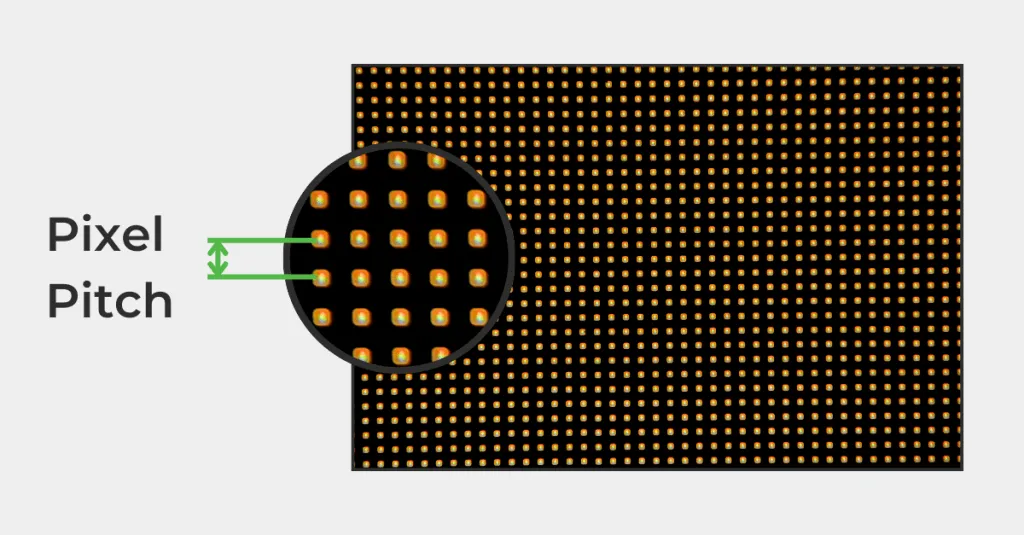
A P6 outdoor LED screen is a direct-view LED display with a nominal 6 mm distance between neighboring pixel centers. It can suit outdoor advertising, public information and event video when the audience is far enough away for the pixel grid to become acceptable. However, pixel pitch alone does not tell you how bright, weather-resistant or economical a complete installation will be.
This guide explains how to specify a P6 outdoor LED screen, calculate its native resolution, compare alternative pitches and build a realistic project budget. It also addresses why two displays labeled P6 can look different. The calculations below are planning examples, while product-specific performance must be confirmed in the quotation and technical datasheet for the exact configuration you order.
1. What Is a P6 Outdoor LED Screen?
A true P6 outdoor LED screen has a 6.0 mm pixel pitch in both directions. Each full-color pixel combines red, green and blue light; the controller adjusts their output to create text, graphics and video. Modules form cabinets, and cabinets combine into the complete display. The LED modules, receiving cards, power supplies, controller and mounting structure all need to work as one system.
01. Pixel pitch, pixel density and native resolution
For square pixels, pixel density equals (1,000 ÷ pitch in millimeters)². At 6 mm, this is approximately 27,778 pixels per square meter. Width in pixels equals active width in millimeters divided by pitch; calculate height the same way. Use the active display area, excluding external borders and structural trim.
For example, a 192 × 192 mm P6 module contains 32 × 32 pixels. A hypothetical 960 × 960 mm cabinet built from those modules contains 160 × 160 pixels. Six cabinets across and three high produce a 5.76 × 2.88 m screen with 960 × 480 pixels. Always verify the actual cabinet matrix rather than assuming every 960 mm cabinet uses this arrangement.
02. P6, P6.25 and P6.67 are different specifications
Suppliers sometimes group nearby pitches under a broad P6 product category. A P6 outdoor LED screen specified at exactly 6.0 mm is not interchangeable with P6.25 or P6.67 hardware. Their pixel density, module dimensions and cabinet resolution differ. Ask for both the precise pitch and the number of pixels across each module before comparing quotations or ordering replacements.
The existing cabinet video below illustrates an outdoor advertising display platform. Confirm its available pitch configuration separately; a cabinet demonstration does not establish that every version is a true 6.0 mm product.
2. Why P6 Works Well Outdoors
A P6 outdoor LED screen can offer a useful balance between visible detail and hardware cost for audiences across a street, courtyard or plaza. Compared with a coarser pitch at the same physical size, it provides more pixels for letters, logos and image edges. Compared with a finer pitch, it may reduce the pixel count and associated electronics needed for the project.
Outdoor suitability comes from the complete product design. Brightness, masks, enclosure sealing, drainage, connectors and thermal management matter independently of the P6 label. An indoor module with the same pixel spacing does not become outdoor-ready merely because a cover is fitted around it.
Choose a P6 outdoor LED screen after checking sunlight direction, typical audience positions and operating hours. A shaded shopping entrance and a west-facing billboard have different contrast and cooling demands. Measure the installation height and viewing angle too: a technically bright screen can still be difficult to read when content is small or the audience sees it from an extreme angle.
3. P6 Outdoor LED Screen: Key Features to Look For
Evaluate a P6 outdoor LED screen using a written specification schedule. The following table separates geometric facts from performance values that depend on the selected hardware.
| Specification | What to confirm | Why it matters |
|---|---|---|
| Pixel pitch | Exact 6.0 mm, or a clearly identified alternative | Determines pixel density and compatibility |
| Native resolution | Module, cabinet and complete screen pixel matrix | Sets the real detail available for content |
| Brightness | Calibrated cd/m², test conditions and dimming range | Supports daytime contrast and nighttime comfort |
| Ingress protection | Front and rear ratings for the assembled configuration | Clarifies which surfaces are protected |
| Refresh and grayscale | Performance at the intended brightness and scan setting | Affects dark gradients and camera capture |
| Power and temperature | Maximum and measured typical W/m²; operating limits | Supports electrical and cooling design |
| Service access | Access to modules, supplies, cards and connectors | Determines repair clearance and service cost |
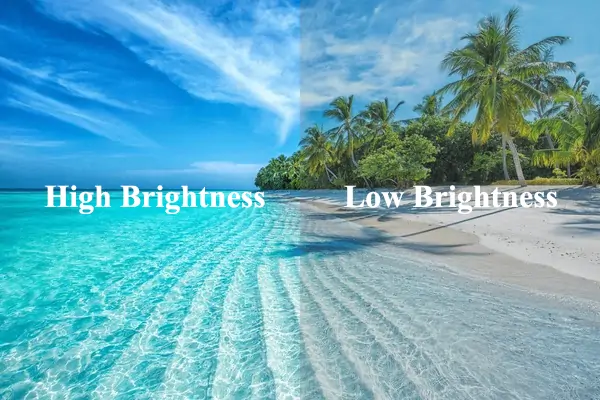
01. Brightness and automatic dimming
Brightness is expressed in nits, equivalent to cd/m². Specify the level needed at your site rather than choosing the highest advertised number. For context, HonghaiLED’s EA960F4 outdoor advertising display lists 6,000–6,500 cd/m² across its stated variants; that is a product example, not a universal P6 specification. Ask for calibrated brightness and a demonstration under representative ambient light.
A P6 outdoor LED screen should also dim appropriately after dark. Check the light sensor location, scheduling options and response if the sensor fails. Excessive nighttime output wastes energy and can make surrounding areas uncomfortable.
02. Weather resistance and enclosure details
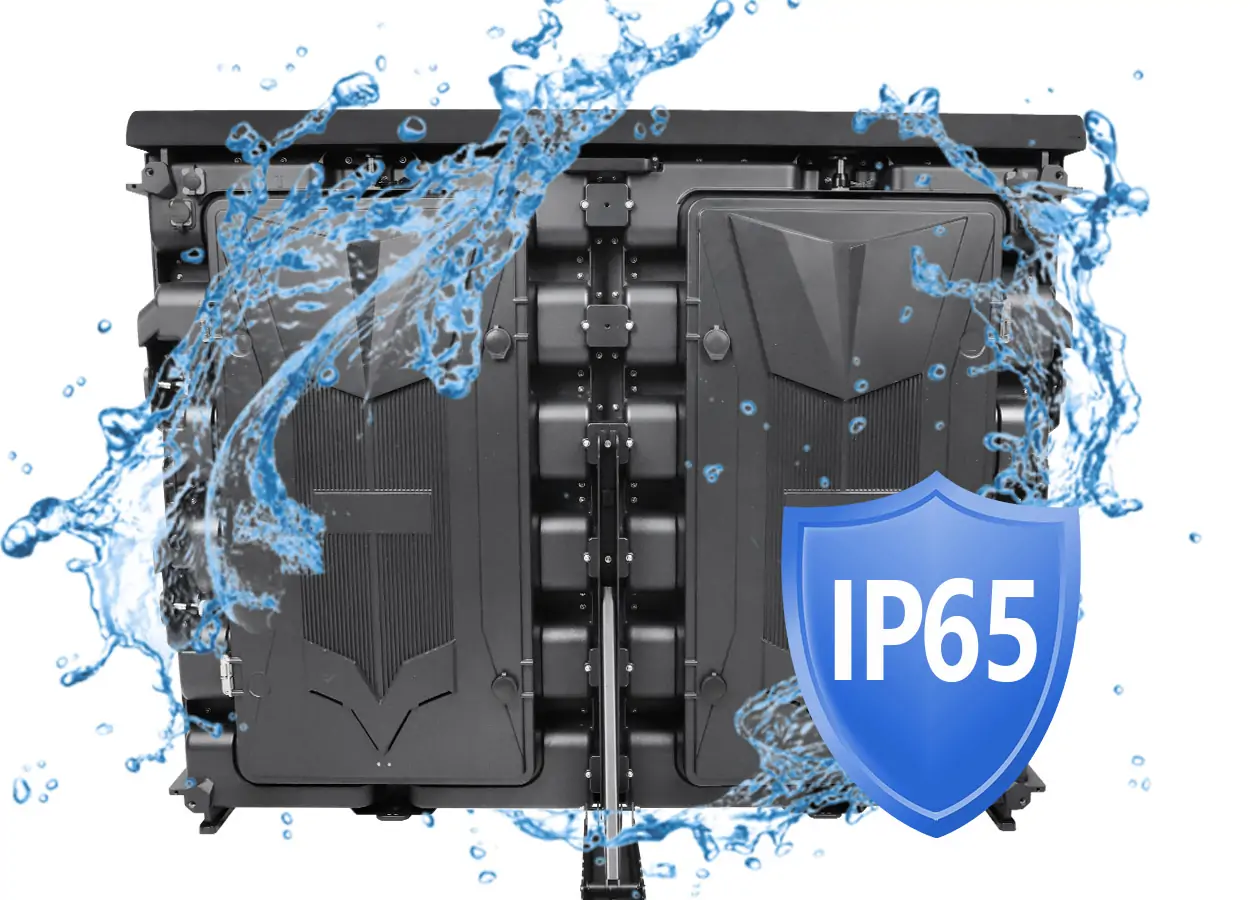
Use the IEC 60529 enclosure protection standard as the reference for IP classifications. IP65 denotes dust-tight protection and protection against water jets under specified test conditions. It does not establish immersion resistance, salt-corrosion resistance or unlimited weather durability.
For a P6 outdoor LED screen, ask whether the stated rating covers the front, rear and assembled cabinet connections. Inspect cable entries, door seals and drainage paths. Coastal exposure, condensation and persistent humidity require separate design consideration.
03. Viewing angle and useful contrast
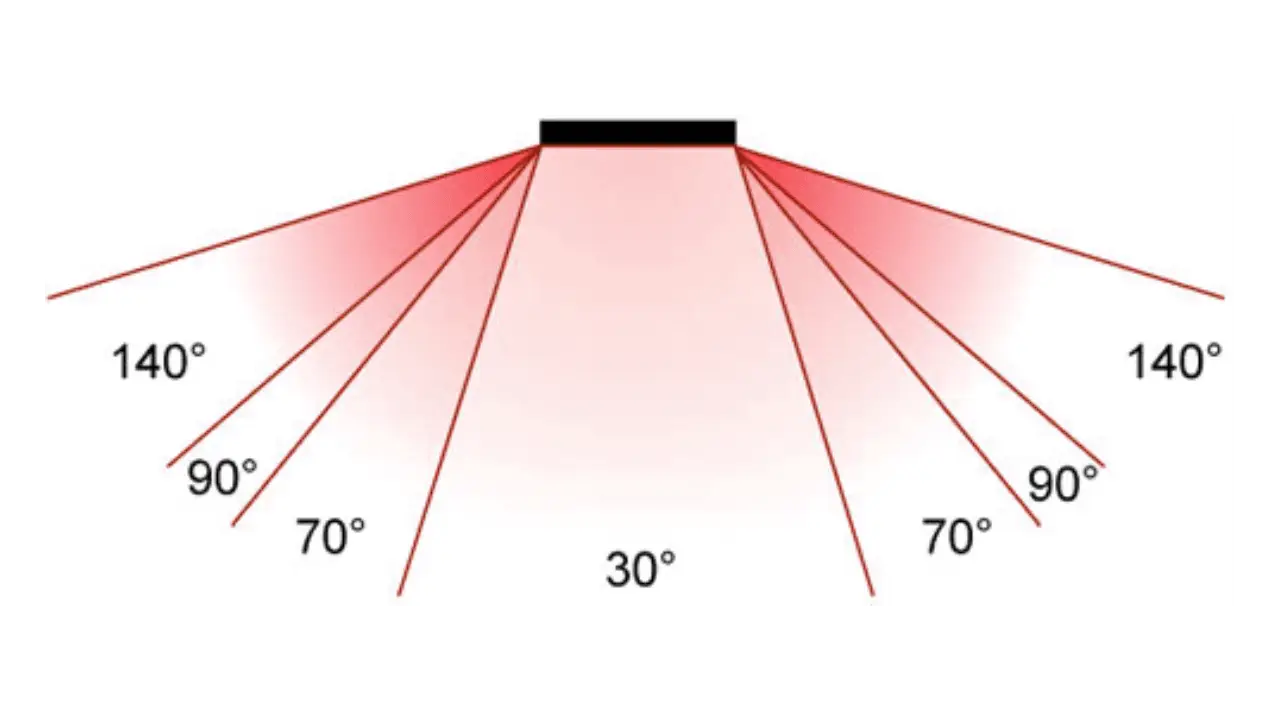
Check horizontal and vertical viewing angles separately. Stand where the audience will actually be, including below a high-mounted display. Compare the visibility of dark content, white text and skin tones from those positions. Masks and sunlight reflections influence useful contrast, so a broad viewing-angle number alone cannot predict readability.
04. Refresh rate and camera behavior
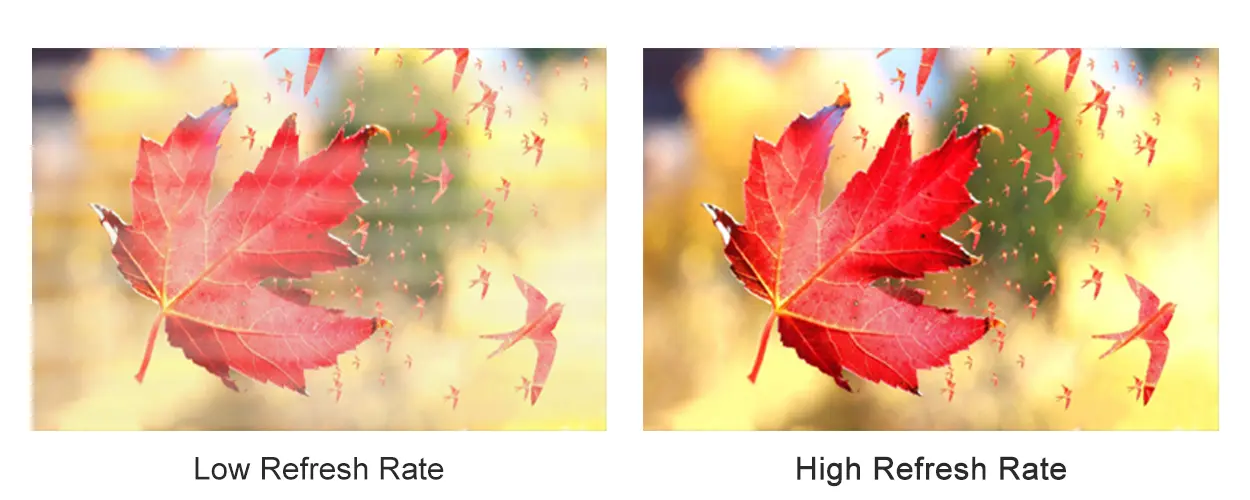
A P6 outdoor LED screen’s LED refresh rate is different from its video frame rate. A 3,840 Hz refresh specification does not mean it plays 3,840 distinct video frames per second. Driver timing, scan ratio, camera shutter and synchronization can affect recorded banding. Test with the intended camera and brightness settings before approving a screen for filming.
05. Color consistency, access and control
Inspect white, gray, red, green and blue test patterns across cabinet seams, then check gradients at nighttime brightness. Ask how replacement modules will be calibrated to the existing display. Confirm front or rear access to every serviceable component, not just the LED face. For scheduled advertising, assess offline playback and user permissions; for live video, verify input formats, scaling, latency and recovery after a signal interruption.
4. What Affects the P6 LED Video Wall’s Cost?
The price of a P6 outdoor LED screen depends on its area, cabinet design, component selection, performance targets and delivery scope. There is no reliable single installed price without those details. A module listing, a cabinet quotation and a turnkey installation estimate describe different purchases and should not be compared as equivalent offers.
01. Build the budget from a defined scope
Calculate display area as active width × active height. Multiply it by the quoted equipment price per square meter, then add the project items below. Confirm whether the quote uses active area or cabinet area and whether spares are included. State currency, delivery destination and the quotation’s validity period.
| Cost item | Scope to request | Common omission |
|---|---|---|
| Display equipment | Cabinets, modules, receiving cards and power supplies | Different brightness or service configuration |
| Control system | Processor or player, software and required inputs | Licenses, connectivity or backup hardware |
| Structure | Engineering, supports, foundations and access | Site-specific wind and mounting requirements |
| Electrical work | Distribution, protection, cabling and commissioning | Supply upgrades and cable routing |
| Delivery and installation | Freight, handling, lifting, labor and applicable charges | Exclusions between supplier and local installer |
| Operation and support | Energy, spare parts, service visits and content management | Replacement shipping and access equipment |
02. Use a transparent calculation, not a headline price
Suppose a project has 18 m² of active display and an equipment quote of US$800/m². Equipment would total US$14,400 before any excluded costs. These are hypothetical inputs demonstrating the calculation, not HonghaiLED pricing or a market estimate. Replace them with an itemized quotation for your configuration.
For an “8 × 12 P6 LED screen” inquiry, specify the units. Eight by twelve feet is approximately 8.92 m²; eight by twelve meters is 96 m². The final dimensions must also fit the cabinet grid. This distinction can change both the budget and resolution dramatically.
03. Compare value over the service period
A P6 outdoor LED screen with accessible components may cost more initially yet need less lifting equipment during repairs. Compare energy at equal brightness and comparable content, and read warranty exclusions. Request written responsibilities for installation, troubleshooting, replacement shipping and onsite labor. A low panel price is useful only when the finished system meets the agreed requirements.
5. Typical Applications of a P6 Outdoor LED Screen
Match a P6 outdoor LED screen to the audience and operating task rather than choosing it solely by venue type. The same pixel pitch can serve several applications, but the required enclosure, control system and mounting arrangement may differ substantially.
01. Advertising and commercial signage
For roadside or plaza advertising, prioritize short messages, recognizable imagery and strong contrast. Determine how long someone can realistically see the display. A P6 outdoor LED screen should communicate one main offer clearly; dense paragraphs and small disclaimers can remain unreadable even when the video looks sharp. For broader product options, review HonghaiLED’s commercial LED display range.
02. Shopping centers and retail areas
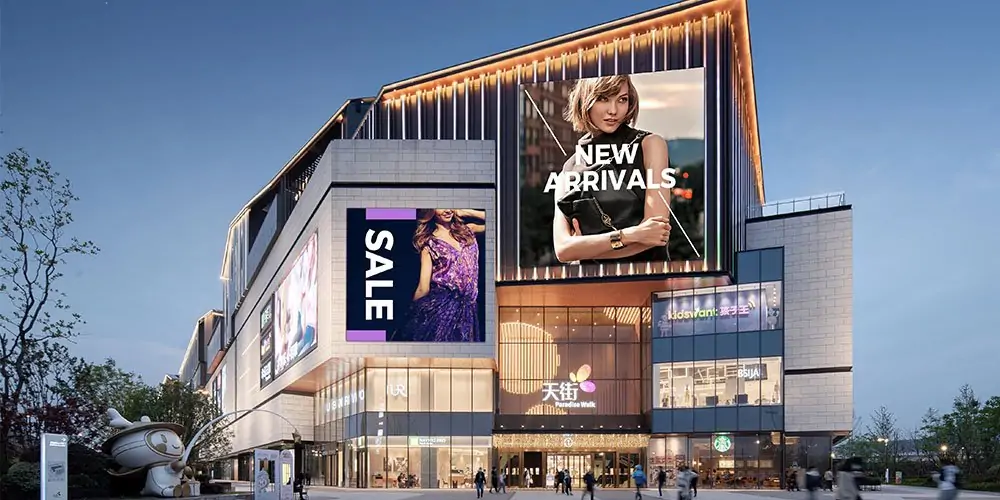
Check the closest pedestrian route before selecting pitch. People approaching an entrance may pass much closer than drivers in a parking area. Consider whether the priority is distant brand recognition or detailed information near the door. Also plan delivery access and repairs without blocking normal customer circulation.
03. Transportation hubs and public information
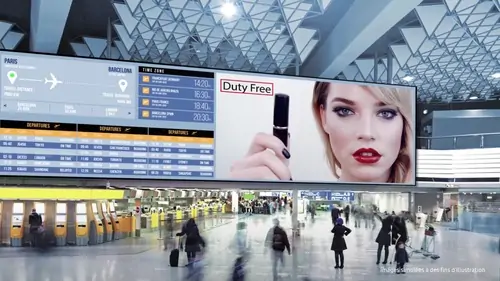
For a P6 outdoor LED screen showing schedules or announcements, establish a minimum readable text size using actual content. Define who can approve messages and how expired information is removed. If connectivity fails, the system should retain an appropriate fallback message rather than displaying outdated live data indefinitely.
04. Stadiums and event venues
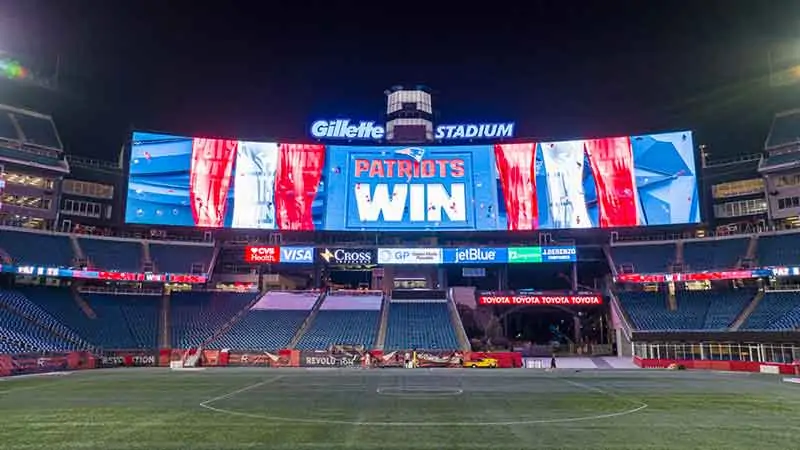
Audience-facing video boards and pitch-side perimeter displays have different mechanical requirements. Perimeter installations need suitable protection for nearby participants, while live-event screens require an appropriate support system and weather operating plan. Test camera feeds, scoreboard graphics and sponsor content at their final pixel dimensions before the event.
05. Building facades
A facade-mounted P6 outdoor LED screen needs a coordinated plan for attachment, ventilation, drainage and maintenance access. Confirm how technicians reach internal components and replace modules. Keep the visual concept tied to feasible service clearances, because a slim appearance should not depend on making routine repairs impractical.
6. How to Decide If P6 Is the Right Pitch
Choose pitch by comparing the nearest important viewing position, content detail, physical screen size and available budget. The familiar rule that pitch in millimeters roughly corresponds to viewing distance in meters is only a starting point. A P6 outdoor LED screen may be usable around six meters for bold content, but that does not guarantee an invisible pixel grid or comfortable reading of small text.
01. Compare P4, P5, P6, P8 and P10
| Nominal pitch | Calculated pixels/m² | Detail relative to P6 | Planning consideration |
|---|---|---|---|
| P4 | 62,500 | 2.25 times the pixels | Consider for closer viewing or finer content |
| P5 | 40,000 | 1.44 times the pixels | Compare when P6 text looks too coarse |
| P6 | 27,778 | Reference | Evaluate for moderate-distance outdoor content |
| P8 | 15,625 | 56.25% of the pixels | Assess for larger messages and longer distances |
| P10 | 10,000 | 36% of the pixels | Check whether distant viewing makes detail sufficient |
These values are geometric calculations for exact nominal pitches, rounded where appropriate. They do not predict brightness, reliability, power consumption or a fixed price difference. P6 has about 78% more pixels per square meter than P8, but the extra pixels matter only when the content and audience can benefit from them.
02. Match the canvas to the message
A P6 outdoor LED screen is not automatically Full HD. A native 1,920 × 1,080 matrix at exactly 6 mm requires an active area of 11.52 × 6.48 m, subject to available cabinet construction. A smaller display can accept an HD signal through suitable processing, but it must scale that signal to its own pixel matrix.
Request a content mockup at native resolution, then assess text, logos and important details from the closest and typical viewing positions. Set a minimum readable character size through that test. Avoid assigning a universal maximum viewing distance: screen dimensions and letter size strongly affect how far away a message remains useful.
7. Practical Things People Forget
Plan the supporting infrastructure for a P6 outdoor LED screen before ordering cabinets. Power, heat, structural loads and access frequently determine whether the installation works reliably and whether its operating costs remain manageable.
01. Estimate energy separately from electrical capacity
Daily energy in kWh equals screen area in m² × average operating W/m² × operating hours ÷ 1,000. For an illustrative 18 m² display averaging 250 W/m² for 12 hours, consumption is 54 kWh per day. At an assumed tariff of US$0.15/kWh, that equals US$8.10 per day, excluding other equipment. These assumptions are not a measured P6 product specification.
Use representative content and brightness schedules to establish average power. A P6 outdoor LED screen’s electrical supply must be designed from the manufacturer’s maximum demand and installation requirements, including startup behavior; the energy example is not a circuit-sizing calculation. Have the project electrician specify distribution, protective devices, grounding and isolation.
02. Coordinate heat, structure and service routes
Confirm airflow clearances, ambient temperature limits and direct solar exposure. Keep discharge air from recirculating into cooling inlets. Have the structure assessed for the actual cabinet weight, wind exposure and mounting arrangement. A P6 outdoor LED screen also needs safe access for inspection, cleaning and component replacement throughout its service life.
03. Prepare content and recovery procedures
Create artwork at the approved aspect ratio and verify the processor’s scaling behavior. Keep essential text away from edges and cabinet obstructions. Back up the receiving-card configuration, cabinet map, calibration data and player settings. Document recovery after power loss and internet outages so that routine faults do not require rebuilding the system configuration from memory.
8. Advantages of Choosing a P6 Outdoor LED Screen
The main advantage of a P6 outdoor LED screen is a practical level of detail for many outdoor audiences without automatically moving to a finer-pitch configuration. Modular construction also allows a display to fit a planned cabinet layout and supports component replacement when the selected product provides suitable access.
There are limits. A P6 outdoor LED screen cannot compensate for undersized text, poor content contrast or an unsuitable viewing location. Pixel pitch also does not guarantee energy efficiency, weather resistance or a particular service life. Compare those characteristics independently rather than treating the P6 label as a quality grade.
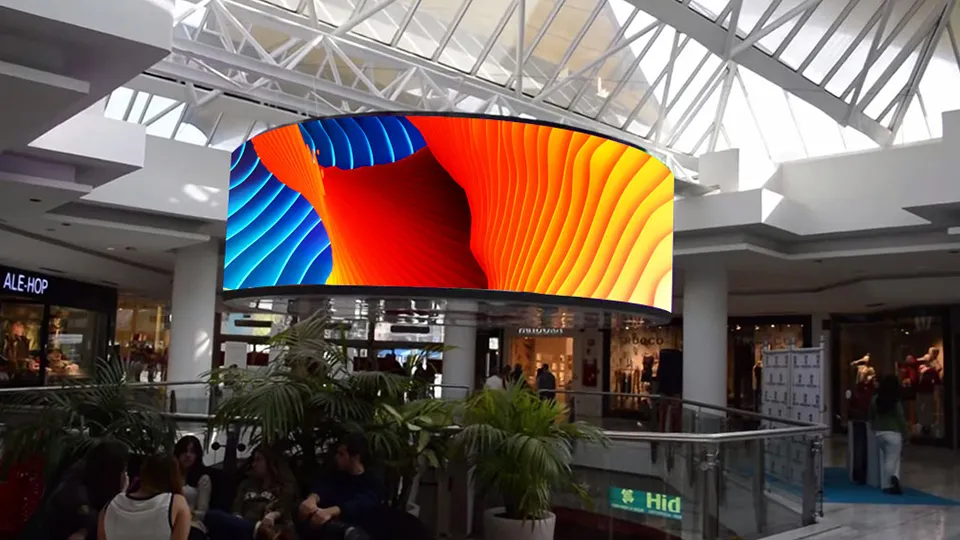
For a shopping complex, the useful decision may be between a larger P6 display carrying simple promotions and a smaller finer-pitch display carrying more detail. Evaluate both with the same content and audience positions. Choose the option that communicates the required message within the available installation and operating budget.
9. A Few Buying Tips Before You Commit
Before ordering a P6 outdoor LED screen, send suppliers the same project brief. Include the proposed active dimensions, nearest and typical viewing distances, site photographs, mounting height, sunlight exposure, operating schedule, content examples, power availability and required service access. Ask each supplier to identify assumptions instead of quietly substituting a different configuration.
01. Agree acceptance tests before production
Request the complete pixel matrix, cabinet drawing and component list. Define checks for pixel defects, cabinet alignment, color uniformity, brightness, playback and power recovery. Review the display using white and low-gray patterns as well as normal content. If filming is important, include the actual camera setup in the acceptance process.
Compare test results with the agreed specification, not only a promotional video. HonghaiLED’s LED screen supplier factory checklist can help organize questions about manufacturing and inspection. Keep the approved configuration attached to the purchase documentation so later substitutions remain visible.
02. Secure compatible spares and practical support
For a P6 outdoor LED screen, spare modules must match more than pitch. Confirm dimensions, connector layout, scan method, driver IC, receiving-card compatibility and calibration requirements. A visually similar replacement can produce incorrect colors or fail to operate with the existing configuration.
Agree the spare-parts quantity, storage conditions, warranty scope and support response process in writing. Record who pays for replacement freight, access equipment and onsite labor. Request operating instructions, configuration backups and a named handover contact so the person managing the display can resolve everyday problems efficiently.
10. P6 Outdoor LED Screen FAQs
01. Why does one P6 outdoor LED display screen look different from another?
Two displays can share a 6 mm pitch yet use different LEDs, masks, driver settings, calibration and brightness levels. Viewing angle, ambient light and content scaling also change the result. Compare both with identical test images at matched brightness and distance. A phone photograph alone is not a reliable visual comparison.
02. What is the best viewing distance for a P6 outdoor LED screen?
Around six meters is a rough starting point for bold content, not a guaranteed optimum. Assess the nearest important audience position and test real text and graphics. For a P6 outdoor LED screen carrying small details, a finer pitch or larger content may be needed.
03. Is P6 better than P8 for outdoor use?
At the same active size, exact 6 mm pitch provides about 78% more pixels than 8 mm pitch. This can improve fine detail. P8 may still meet the brief for large messages seen farther away. Compare complete configurations and viewing tests rather than selecting solely by the pitch number.
04. How much does a P6 outdoor LED screen cost?
Request a configuration-specific quote covering area, cabinet design, brightness, control equipment and delivery scope. Add structure, electrical work, installation and ongoing service. The illustrative cost calculation in Section 4 shows the method; it is not a current product price or an installed project estimate.
05. Is every P6 outdoor LED screen waterproof?
No. P6 describes pixel spacing, not ingress protection. Check the stated front and rear IP ratings and the supporting test documentation for the assembled product. Water-jet protection does not establish suitability for submersion, pressure washing or corrosion-prone conditions.
06. Can I replace a P6 module with any other P6 module?
No. Check the exact pitch, physical dimensions, pixel matrix, voltage, connectors, scan method and driver configuration. Ask the supplier to confirm compatibility and calibration. Keep verified spares for the installed screen rather than relying on a matching product label.
07. Can a P6 outdoor LED screen show HD video?
It can show an HD source through compatible control equipment, but visible detail is limited by native resolution. At exactly 6 mm pitch, 1,920 × 1,080 native pixels occupy 11.52 × 6.48 m. Smaller displays scale the input to their own matrix.
11. Summary: Choosing Your P6 Outdoor LED Screen
A P6 outdoor LED screen is worth evaluating when moderate-distance viewing, useful image detail and project cost need to be balanced. Start with audience positions and native resolution, then verify brightness, weather protection, camera behavior, service access and the full installation scope.
Use the comparison tables and calculations to prepare a consistent brief. To discuss an appropriate P6 outdoor LED screen configuration, send HonghaiLED your screen dimensions and site requirements. Request a cabinet layout, technical datasheet and itemized quotation before making the final selection.
Related Posts
Rolling LED Screen & Roll-Up LED Display Buying Guide
A rolling LED screen, also called a roll-up LED display…
LED Screen vs LCD Screen: Differences & How to Choose
LED screen vs LCD screen is a comparison of two…
How to Choose the Best LED Lamp Beads for LED Displays
Choosing the best LED lamp beads for LED displays starts…

No Comments