
How to Choose the Best LED Lamp Beads for LED Displays
Choosing the best LED lamp beads for LED displays starts with the screen’s operating conditions: viewing distance, ambient light, required color consistency, daily running time and service access. The right component must work with the module PCB, driver IC and calibration system. A bright sample or a familiar brand name alone cannot establish how the finished wall will perform.
This guide explains how to compare RGB LED lamp beads, interpret SMD package numbers, evaluate SMD versus COB and GOB, and verify quality before ordering. It focuses on direct-view video walls and signage rather than household bulbs or white LED strips. Buyers will find comparison tables, practical test procedures and questions that turn vague promises into measurable purchase requirements.
1. What Are LED Lamp Beads and Why Do They Matter?
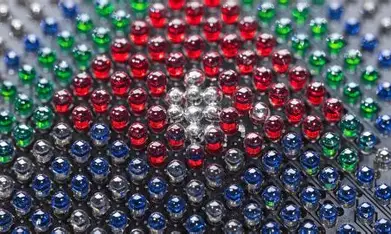
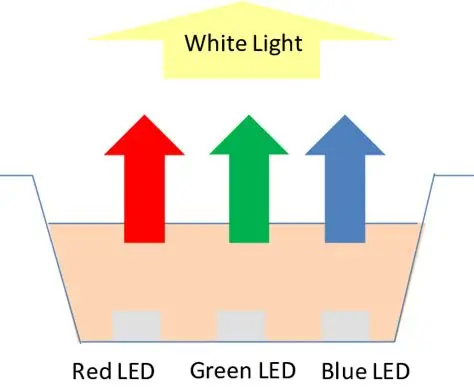
LED lamp beads are packaged light-emitting components mounted on an LED display module. A conventional RGB SMD package contains red, green and blue emitters that combine to form one full-color pixel. The semiconductor die produces light; the package provides electrical connections, optical geometry and physical protection. The words “LED chip,” “lamp bead” and “display module” therefore describe different levels of the assembly.
LED lamp beads influence brightness, color uniformity, viewing angle and reliability. However, they do not independently determine refresh rate, grayscale quality, waterproofing or screen lifetime. Those results also depend on the driving electronics, thermal design, assembly quality and enclosure. Evaluate the finished display at its intended settings, then use component documentation to explain the result.
Start by recording screen dimensions, resolution, nearest viewing distance and installation environment. Pixel pitch is the center-to-center distance between neighboring pixels, measured in millimeters. Package dimensions describe the component footprint. Neither number can replace the other. A package must physically fit the layout, but a smaller package does not automatically produce a better image or longer service life.
For replacement work, identify the existing part number, polarity, pin arrangement and brightness/color bin before ordering LED lamp beads. A visually similar component can have different electrical connections or optical behavior. Keep the original module configuration and calibration files, and use qualified repair personnel to avoid damaging pads or neighboring components.
The existing EagerLED repair demonstration below illustrates the servicing context. Confirm the procedure and replacement component against your own module documentation before attempting a repair.
2. LED Lamp Bead Specifications That Matter
Compare LED lamp beads using identical test conditions. A brightness value without drive current, pulse duration, duty cycle and temperature is incomplete. Request the exact datasheet revision and the production bin specification, then compare the assembled module at the agreed white point and operating brightness.
01. Brightness, viewing angle and electrical conditions
Individual LED intensity may be specified in millicandelas (mcd), while screen luminance is measured in candelas per square meter, commonly called nits. These quantities are not interchangeable. Pixel density, scanning duty, optical losses and calibration all affect the screen result. Do not convert a lamp’s headline mcd rating directly into an outdoor display brightness claim.
For high brightness LED lamp beads, check horizontal and vertical intensity curves as well as the quoted viewing angle. A narrower emission pattern can increase on-axis intensity without improving total useful light. View white and saturated colors from the audience’s actual positions: acceptable brightness off-axis does not necessarily mean acceptable color consistency.
Review forward voltage, recommended operating current, pulse limits and thermal derating for each color. The absolute maximum rating is a damage boundary, not a routine operating target. Ask how much current is required to achieve the contracted screen brightness after calibration and what operating margin remains during hot weather.
02. RGB binning and color consistency
Binning sorts LED lamp beads into groups with similar measured characteristics. For RGB displays, request intensity bins, wavelength or chromaticity limits for each primary, and forward-voltage bins where relevant. Also specify the assembled screen’s white-point tolerance and uniformity measurement method. A single “premium bin” label does not describe all these requirements.
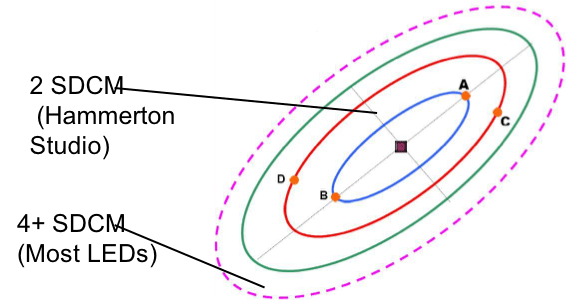
SDCM describes color differences around a reference chromaticity and is often used in white-light applications. It should not become a universal one-number acceptance rule for saturated RGB emitters. Ask which color space, reference point, instrument and calculation the supplier uses. Evaluate primary colors and mixed white separately at normal and low brightness.
03. Refresh rate, grayscale and driver compatibility
Refresh behavior and grayscale depend strongly on the driver, scan architecture, controller settings and PWM timing. LED lamp beads must be electrically compatible with that system. A quoted 3,840 Hz refresh rate does not guarantee clean footage at every shutter speed, frame rate or brightness level; test the actual camera and display combination.
Request dark-gray ramps, slow fades and low-brightness video. Look for missing shadow detail, tint changes, ghosting and uneven first scan lines. A nominal bit-depth specification describes available coding or processing capability, not necessarily the number of visually usable levels at your chosen operating point.
04. Reliability evidence and lifetime claims
For LED lamp beads, obtain applicable moisture, temperature-cycling, ESD and operating-life test reports with the tested part number, sample size and pass criteria. Verify handling and reflow requirements too. Moisture-sensitive packages can be damaged during assembly even when the purchased components are otherwise suitable.
LM-80 measures light-output and color maintenance under specified conditions; TM-21 provides a method for projecting long-term lumen maintenance from test data. Neither establishes the lifetime of an entire video wall. The Illuminating Engineering Society’s explanation of lifetime claims cautions against treating component lumen maintenance as complete-product reliability. Ask what any quoted L70 value covers and how it relates to the supplied RGB device.
| Parameter | Ask the supplier for | Verify on the display |
|---|---|---|
| Brightness and current | Intensity bins, test current, duty cycle and temperature | Calibrated white luminance at operating settings |
| Color consistency | RGB wavelength/chromaticity bins and batch traceability | Primary colors, white point and low-gray uniformity |
| Viewing angle | Horizontal and vertical optical curves | Brightness and color from actual audience positions |
| Electrical compatibility | Pinout, polarity, forward voltage and pulse limits | Driver headroom, scan behavior and thermal margin |
| Reliability | Applicable test reports and assembly requirements | Failures and drift before and after agreed testing |
| Serviceability | Replacement procedure, spare bins and availability | Repair quality and matching of replacement modules |
3. SMD, COB, GOB and IMD: Which Technology Fits?
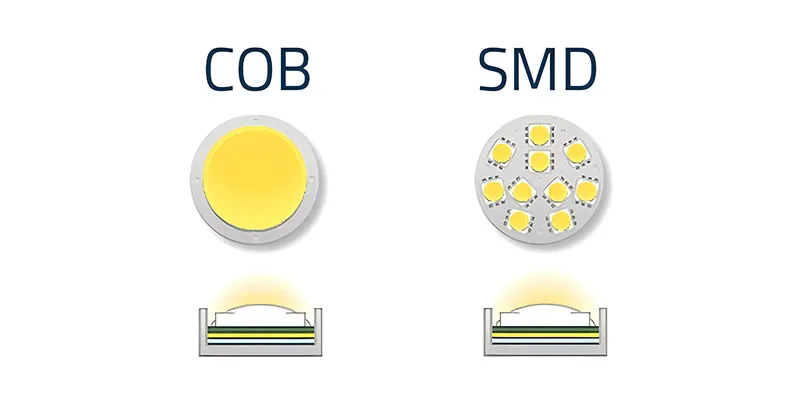
When comparing LED lamp beads and display packaging, separate the component architecture from protective treatments. SMD and IMD describe packaged devices; COB attaches dies directly to a board or substrate. GOB generally adds protection over an assembled display surface. These terms do not, by themselves, certify contrast, waterproofing or repair cost.
01. SMD and common package sizes
SMD LED lamp beads are soldered to the module PCB. Familiar designations such as 1515, 2121, 2727 and 3535 generally indicate nominal package dimensions: approximately 1.5 × 1.5 mm, 2.1 × 2.1 mm, 2.7 × 2.7 mm and 3.5 × 3.5 mm respectively. Confirm the mechanical drawing, including height and solder pads, for the actual part.
SMD 1515 versus 2121 is primarily a package/layout comparison, not a quality ranking. Likewise, SMD 2727 versus 3535 does not determine outdoor suitability by itself. Suppliers offer different optical, electrical and environmental grades within a size family. Use the approved module bill of materials rather than assuming matching dimensions make two components interchangeable.
02. COB, GOB and IMD differences
COB avoids individually packaged SMD LED lamp beads by integrating dies directly on the substrate. Encapsulation can protect the emitting surface, while fine-pitch designs may benefit from the resulting geometry. Evaluate surface reflectance, uniformity and repair support on the offered module. Field service often involves module replacement, but specialist factory repair may still be possible.
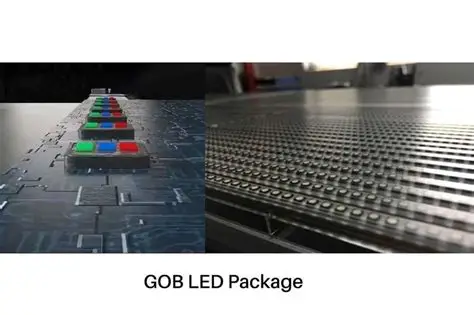
GOB adds a protective layer over an assembled module, often containing SMD LED lamp beads. Its effectiveness depends on material, thickness, adhesion and curing quality. Ask how the coating affects reflections, color, heat transfer and repair. IMD integrates multiple pixels in one package; confirm the pixel arrangement and replacement unit before comparing costs.
| Technology | Construction | Useful selection reason | Check before purchase |
|---|---|---|---|
| SMD | Packaged RGB devices soldered to PCB | Broad module choice and component-level repair options | Impact exposure, solder quality and exact outdoor grade |
| COB | Dies bonded directly to substrate with encapsulation | Fine-pitch integration and protected surface | Reflections, consistency and factory repair arrangements |
| GOB | Protective coating over an assembled module | Additional surface protection where handling is frequent | Coating uniformity, aging and rework procedure |
| IMD | Multiple pixels integrated in one package | Alternative assembly architecture for dense pixel layouts | Pixel configuration, sourcing and replacement granularity |
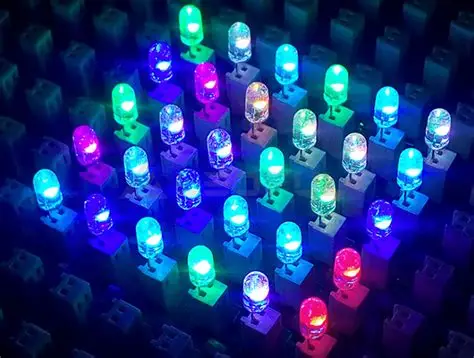
| DIP | Through-hole LED packages | Option for some larger-pitch signage requirements | Color mixing at viewing distance and optical distribution |
There is no universal pixel-pitch boundary where one technology becomes best. Compare available modules at the required resolution, brightness and installed cost, including maintenance. For conventional modules, EagerLED’s Nationstar LED lamp specification downloads provide a starting point for checking individual part drawings and ratings.
4. How LED Lamp Bead Quality Affects the Picture
01. White balance, calibration and aging
RGB emitters can change output and chromaticity differently with temperature and aging. The direction of white-point drift depends on the actual components and operating conditions; it cannot be predicted reliably from a simple rule that one color always lasts longer. Request channel-specific evidence where available and measure the complete module after thermal stabilization.
Calibration can reduce brightness and color differences between LED lamp beads, but it has limits. Correcting a bright pixel usually means reducing output toward a common target. Large mismatches consume brightness headroom, and calibration cannot repair a broken connection or an unsuitable emission pattern. Reserve matching spare modules and retain calibration records for future service.
02. Dead pixels, ghosting and clustered failures
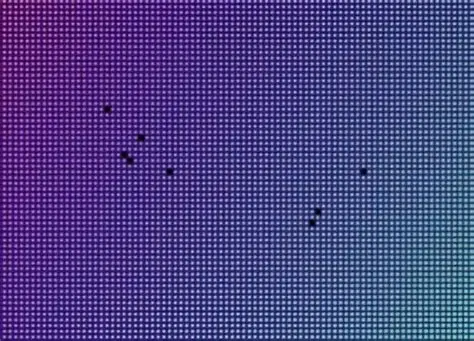
A failed LED lamp bead can appear dark, stuck on or missing one primary color. Lines and clusters can also involve solder joints, connectors, driver channels or scanning circuits. Do not diagnose every “caterpillar” pattern as a wire-bond defect. Texas Instruments’ LED-driver documentation identifies open or short LEDs, ghosting and low-grayscale behavior as system issues addressed by driver circuitry.
Inspect red, green, blue, white and black test patterns rather than relying on attractive demonstration footage. Define whether defect limits count complete pixels or individual subpixels, and separately limit adjacent failures. A small cluster near a presentation title can be more distracting than the same number of isolated faults elsewhere.
03. Moiré and camera scan bands
Moiré is a spatial interaction between repeating patterns, including the display pixel grid and camera sensor sampling. Scan bands are usually a temporal interaction involving exposure and display driving. Their remedies differ. Test camera distance, lens, focus, shutter timing and synchronization as appropriate; changing LED lamp beads alone does not guarantee either problem disappears.
5. Choosing LED Lamp Beads for Each Application
01. Outdoor fixed displays
Outdoor LED lamp beads need appropriate optical output and environmental durability, but the installed system must also manage sun exposure, heat, water and service access. Specify required screen luminance for the site and include nighttime dimming. A shaded façade and a billboard facing direct sunlight should not inherit the same brightness target automatically.
Check the exact front and rear enclosure ratings, seals, connectors and drainage arrangements. An IP rating belongs to the tested enclosure or assembly; it is not established merely by choosing an “outdoor” bead. Ask for relevant humidity and UV evidence, then review ventilation and corrosion protection for the location. Compare suitable commercial LED display configurations at the same operating brightness.
02. Rental and staging
For rental fleets, LED lamp beads must remain visually compatible across cabinets that are repeatedly mixed and moved. Specify acceptable batch variation, calibration-file management, corner protection and spare-module compatibility. Evaluate handling damage and repair turnaround alongside optical performance. A protected surface may help, but it does not replace careful packing and trained installation crews.
Test representative panels together before adding a new batch to an existing fleet. Use the cameras and control equipment expected on shows, including low-brightness scenes. EagerLED’s rental LED display options can be compared by cabinet format and service method as well as pixel pitch.
03. Fine-pitch indoor displays
For meeting rooms and control rooms, prioritize readable text, uniform dark grays, comfortable brightness and reflections under actual room lighting. Fine-pitch LED lamp beads or COB assemblies must reproduce detail at the nearest seat. Compare full modules with your presentation slides; a tiny bright sample does not reveal seams, edge uniformity or low-gray behavior.
Check how maintenance is performed after installation and whether cooling noise affects the room. The best indoor LED screen configuration balances image quality with resolution, access and operating hours. Package technology should support those requirements rather than become the only purchasing criterion.
04. Transparent and creative displays
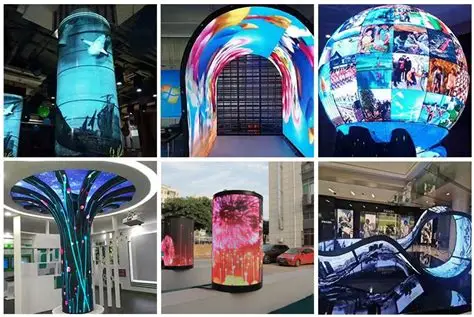
For transparent LED screens, package size, strip width, pixel spacing and emission direction affect both visibility and transparency. Ask how transparency is calculated and inspect the structure with the display switched off. Verify cable visibility, viewing direction and readability against the actual background before approving LED lamp beads for a window or creative installation.
6. How to Compare LED Lamp Bead Brands and Suppliers
01. Compare exact series, not broad brand rankings
Buyers often compare Nationstar and Kinglight LED lamp beads, or request another established manufacturer. Compare exact series and grades within the proposed module, not just logos. Different product lines can target different brightness, package size, environment and price requirements. Country of origin alone does not establish color consistency, failure rate or suitability.
Request the full part number, bin codes, production lot, authorized sourcing evidence and a written substitution policy. If a supplier proposes an alternative, require the same electrical and optical checks before accepting it. A price difference can reflect purchase volume, specification or service scope; it is not automatic evidence that a supplier is dishonest.
02. Make samples representative of production
A hand-selected demonstration module does not prove that a full shipment will match. Ask how production samples are selected, how lots are traced and how final modules are tested. Compare samples from the offered manufacturing configuration. Record driver model, scan ratio, firmware, calibration and brightness settings so the sample result can be reproduced during acceptance.
For LED lamp beads, material claims such as gold-wire construction are only part of the evidence. Bonding architecture, encapsulation, process control and qualification results also matter. Some designs use different interconnect methods. Evaluate the complete construction and relevant reliability reports rather than treating one material label as a universal quality guarantee.
03. Put support obligations in writing
Specify warranty coverage, replacement turnaround, spare stock, freight responsibilities and what happens when a component becomes unavailable. Ask whether replacement modules will be calibrated to the installed screen. EagerLED’s LED screen supplier factory checklist helps extend component questions into production and delivery verification.
7. LED Lamp Bead Buying Mistakes and Acceptance Checklist
The main buying mistake is comparing LED lamp beads at different operating conditions or treating one headline number as a complete quality score. Compare the same screen area, native resolution, calibrated luminance, electronics, spares and warranty scope. Then assess the cost of maintenance access and downtime over the planned service period.
Agree a written acceptance procedure before paying for a large order. Define sample selection, operating temperature, warm-up time, test patterns, instrument position and pass limits. A burn-in period can reveal early problems, but an arbitrary number of hours does not prove years of reliability. Select test duration and stress conditions with the supplier for the actual project.
| Check | Test or record | Agree before ordering |
|---|---|---|
| Component identity | Part numbers, bin labels and lot records | Approved bill of materials and substitution rules |
| Pixel defects | RGB, white and black patterns on every module | Pixel/subpixel definition, maximum count and cluster limit |
| Uniformity | Measurement grid at normal and low brightness | Luminance and chromaticity tolerances with test method |
| Thermal stability | Temperatures, brightness and color after stabilization | Ambient conditions and permitted performance change |
| Camera performance | Representative cameras, shutter settings and gray ramps | Accepted recording conditions and artifact criteria |
| Maintenance | Trial spare-module replacement and recalibration | Matching requirements, repair time and support scope |
Express defect rates clearly. For example, 10 defective pixels among 200,000 tested pixels equals 50 parts per million: 10 ÷ 200,000 × 1,000,000. This is a calculation example, not an industry acceptance standard. Specify separate limits for dead, stuck and clustered defects, including whether acceptance is assessed per module or across the complete wall.
Finally, compare LED lamp beads through total ownership cost. Include initial components, power at an agreed content profile, spare modules, calibration, labor and access equipment. Keep inspection photos and measurement files with module serial numbers. Those records are more useful for resolving a later mismatch than a quotation that says only “high quality.”
8. LED Lamp Beads FAQ
01. What are the best LED lamp beads for an LED display?
The best LED lamp beads are the exact components that meet your module’s electrical requirements and the screen’s brightness, color, environment and service needs. Compare documented part numbers and production samples at identical settings. There is no universal best brand, package size or technology for every indoor, outdoor and rental installation.
02. Are SMD 1515, 2121, 2727 and 3535 interchangeable?
No. These designations generally describe nominal package dimensions, not complete compatibility. Check pad layout, height, polarity, pinout, RGB characteristics, current limits and bin codes. Even LED lamp beads with the same footprint can produce a visibly different repair. Use the approved replacement part or validate an alternative with the module manufacturer.
03. Is COB better than SMD or GOB?
COB can offer useful integration and surface protection for fine-pitch displays. SMD offers a broad component and module ecosystem, while GOB adds a protective coating to an assembled surface. Compare actual image quality, reflections, durability evidence and repair arrangements. The technology name alone cannot establish which display provides the best value.
04. Can I mix different brands or batches of LED lamp beads?
Avoid unqualified mixing within the same display. Different bins or batches may vary in brightness, chromaticity and aging behavior even when nominal specifications look similar. If mixing is unavoidable, compare production samples and calibration headroom first. Keep matching spare modules and lot records to reduce visible differences after servicing.
05. How many dead pixels are acceptable on a new screen?
Use the acceptance limits in the purchase contract. Define pixels versus subpixels, inspection patterns, viewing conditions, maximum counts and clustered defects. A PPM limit alone can hide an objectionable local cluster. LED lamp beads should be assessed within the assembled module, because soldering and driver faults can also produce pixel defects.
06. How long do outdoor LED lamp beads last?
There is no single dependable outdoor lifetime without operating and test conditions. Current, temperature, moisture, UV exposure and assembly quality affect service life. Separate gradual light-output decline from sudden failure, and ask what the supplied warranty covers. A component maintenance projection does not guarantee the life of power supplies, drivers, seals or the complete screen.
07. Does a 3,840 Hz refresh rate guarantee flicker-free video?
No. Camera exposure, frame rate, scan architecture, PWM timing and synchronization can still produce artifacts. Test the exact screen and camera at the intended brightness and shutter settings. LED lamp beads influence the optical result, but refresh and grayscale performance must be evaluated with the driver and control system.
08. How should I verify LED lamp beads before a bulk order?
Approve the exact bill of materials, obtain representative modules and define written acceptance tests. Measure primary colors, white balance, luminance and low-gray performance before and after the agreed operating test. Review relevant reliability reports and traceability. Record results and retain a reference sample so delivery can be compared against the approved configuration.
9. Conclusion: Choose LED Lamp Beads as Part of a System
Choose LED lamp beads by matching the application, verifying the exact component and testing the finished display. Begin with viewing conditions and resolution, compare optical and electrical data on equal terms, and confirm color consistency, thermal behavior and serviceability with representative modules. Use the comparison tables to organize evidence rather than relying on a single brightness or lifetime claim.
For an EagerLED quotation, prepare your screen dimensions, installation environment, nearest viewing distance, camera requirements and operating schedule. Request the proposed LED lamp beads or COB configuration, driver details, matching spares and acceptance procedure together. A clearly documented system specification gives you a practical basis for comparing offers and checking the delivered screen.
Related Posts
LED Screen vs LCD Screen: Differences & How to Choose
LED screen vs LCD screen is a comparison of two…

LED Packaging Technology: SMD, COB, GOB & MIP Guide
LED packaging technology determines how light-emitting chips are connected, supported,…
16:9 Aspect Ratio vs 4:3: LED Display Sizes and Resolutions
16:9 vs 4:3 describes screen shape: 16:9 is wider, while…

No Comments